Day 9. We have now entered the Danube River and our first port of call is Regensburg. This town has buildings dated to the Roman times, around 175AD, and it is the furthest most northern point on the Danube so was an important military post. After the Romans left, townsfolk moved inside the town walls and built on top of what the Romans left behind. With no industry in the town, it did not suffer destruction from bombing during WW2 so the buildings are still original. The Stone Bridge across the Danube dates from around the turn of the first century, highly unusual as all other bridges from the era were wooden. As such, with the certainty that a stone bridge is still standing, it became the primary trade route north-to-south and east-to-west and the latter crusaders travelled through here as well. After each of the guided walking tours, we usually have an hour or 2 free time to wander around the towns, go shopping, stop for refreshments, etc.
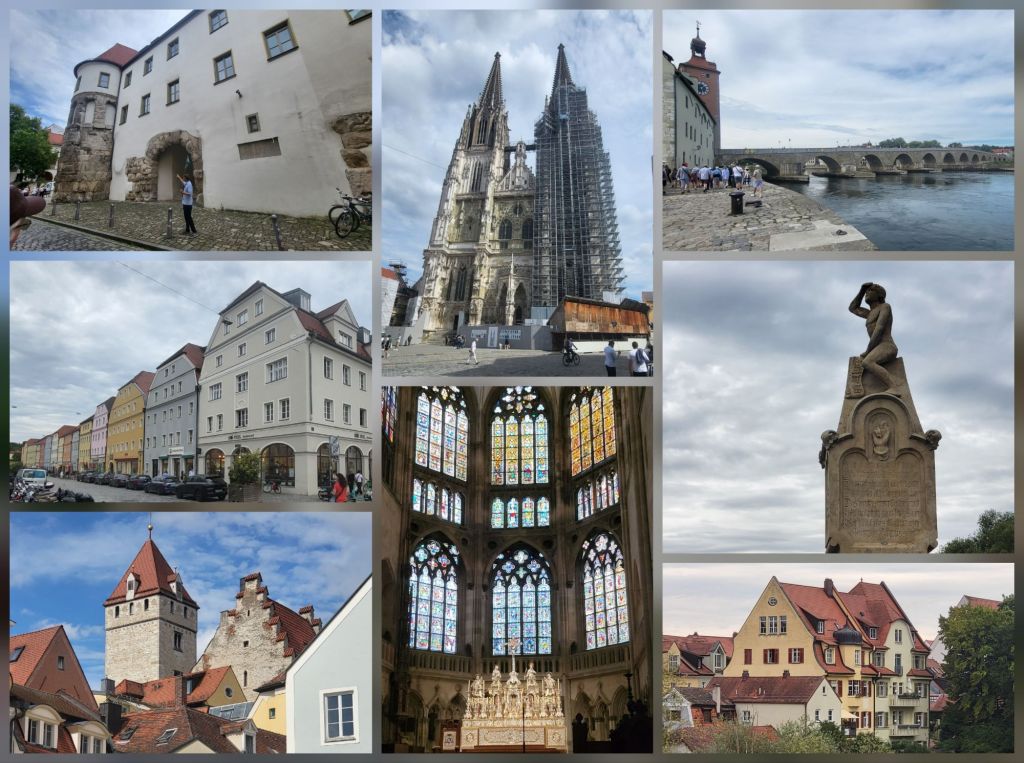
With the general lack of rain, there has been concern over river levels. Normally we would re-embark in Regensburg but the river levels are dropping fast so whilst we were touring Regensburg, the boat continued on past the shallowest part of the river whilst it still could. Emerald organised buses to collect us at Regensburg and take us an hour further along the river to re-embark. If they waited, we would have had to pack for transfer to a sister ship on the other side of the shallow – but crisis averted! Once on board, we continued cruising through the night. About 1am, there were some interesting sounds as the boat grounded on the riverbed. This did not cause much concern as the professional crew had us clearing more shallows and back cruising in no time.
Day 10 had us arriving in Passau at breakfast time. Walking tours left quite early through this beautiful town, right at the Austrian border. Known as the Three Rivers City, it lies at the confluence of the Danube, Inn and Ilz rivers and is overlooked by the Veste Oberhaus, a 13th-century hilltop fortress. The old town below is known for its baroque architecture, including St. Stephen’s Cathedral, featuring distinctive onion-domed towers and an organ with 17,974 pipes. When we were there, the pipes had been removed for their first cleaning in 40 years.

After a short period of free time, we’re on the water again for an afternoon cruise to Linz, Austria. We cruised through forest-covered hills, such a beautiful part of the world. We are now fully in Austria, having had Germany on one side of the river and Austria on the other for a number of miles after Passau. The Austrian flag is now flying.

As we cruised down, the weather closed in. Our next stop was Linz, not a formal tour stop but a stop to collect the passengers who went on the 6-hour cross-country excursions. Those who wanted were allowed to go ashore and do their own looking around, but as it was constantly raining, many did not. We went ashore and wandered up to the main town square and beyond. Linz is obviously a more major city than the towns we had previously been in. I did note the legal cannabis shops dotted around the main shopping area.

Day 11. We have 2 towns we are stopping in today, Melk and Dürnstein. Melk is situated within Austria’s wine-growing region and home to a 900-year-old Benedictine abbey. As we were short of a guide, I was given the task! Well at least temporarily, until the real guide arrived 😆. We were guided through a series of opulent rooms, each adorned with fine Italian Baroque architecture and ornate gold leaf walls and set up as part of the overall museum walk which includes the ancient monastic library. After the tour through the abbey, we wandered down through the town, shopping and having Regensburg, and through the lovely forest back to the boat.

Later, we sailed through the UNESCO World Heritage-listed Wachau Valley. The Wachau is a picturesque valley along the Danube River between Melk and Krems, famous for its stunning landscape and its steep terraced vineyards, historic towns like Dürnstein with its famous castle ruins, and the magnificent Melk Abbey.

Dürnstein is one of the most enchanting villages in the Wachau wine region, first mentioned in writings in 1192. Apparently, Richard the Lionheart was imprisoned at the castle here after returning from the Crusades. Then in 1645 the castle was ruined by Swedish troops. There is a small abbey and a church, behind which is a crypt. As new people were buried, those in the plots were dug up and their bones fill the crypt, in full sight for those who want to look! Now the village is just a very pleasant walk experience where the shops specialise in Apricot liquors and wines etc. We had a beautiful relax on the banks of the Danube.

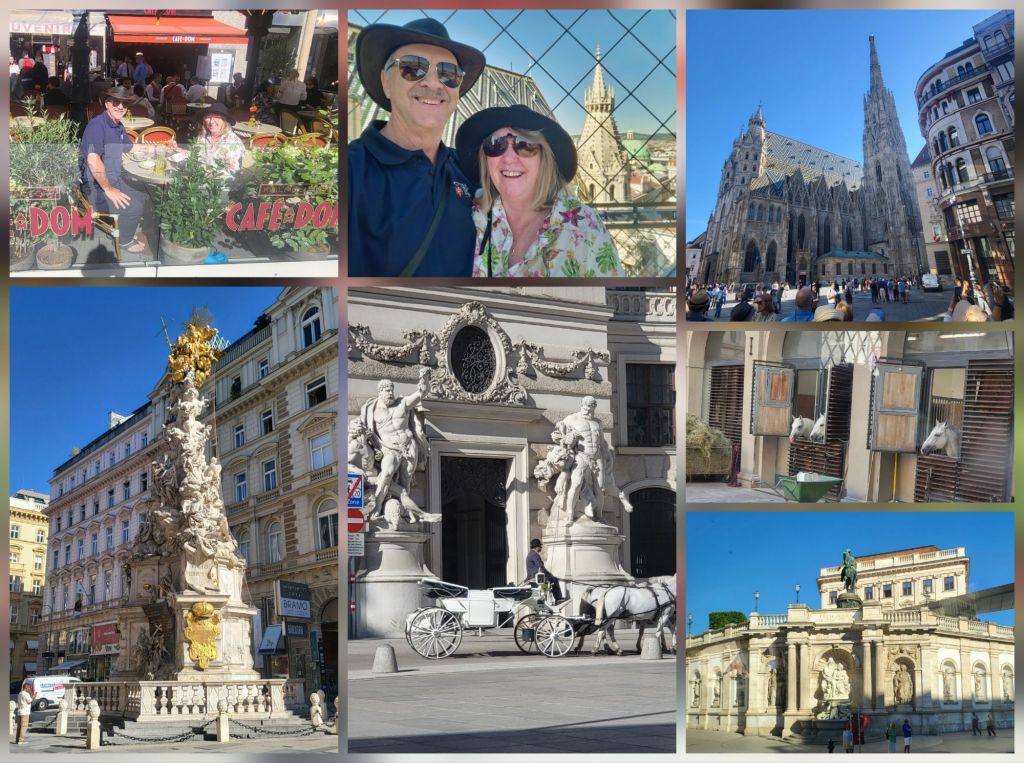
Day 12, and it’s a full-on day today. We are stopped in Vienna all day. The morning started with a comprehensive bus tour around the city together with an hour walking tour through the old city centre. It’s a fascinating city and the centre is just full of impressive historical buildings. After the walking tour we stopped, had coffee and cake at an Al Fresco cafe in the cathedral square, and then took the elevator up the small tower in the cathedral.
In the afternoon we had an excursion to the Schönbrunn Palace, the summer palace for the Habsburg dynasty. The history of the palace and its vast gardens spans over 300 years, reflecting the changing tastes of successive Habsburg monarchs. Following the downfall of the Habsburg monarchy at the end of WW1, the palace became the property of the newly founded Austrian Republic and has been preserved as a museum. We have certainly had our fill of ornately decorated palaces and cathedrals but it was still good to see.
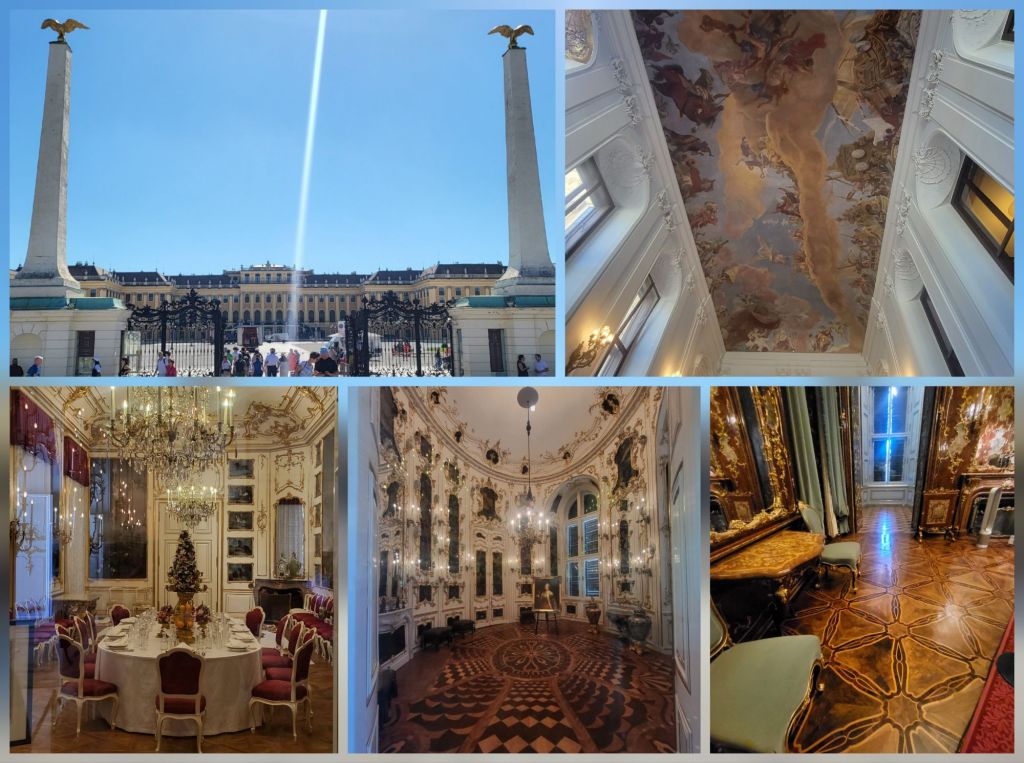
In 1695, the French garden was planned and created at the palace. The garden points towards a 60-metre-high hill, which since 1775 has been crowned by the Gloriette structure. A wander through these gardens to the Fountain at the end of the fasten was a must before we left. A beautiful sunny day, the flower gardens, the statues, the ornately designed fountain and pool, and of course great ice cream!

The day was still not finished. One of the optional excursions for after dinner was to attend a concert at the Palais Lobkowitz, considered one of the oldest palaces in Vienna. Beethoven was often a guest in the palace and conducted his 3rd symphony in the Eroica Hall, the ceremonial hall, where we attended the concert. It was absolutely fabulous!!

Day 13. Bratislava, Slovakia. This morning a home visit was organised. I will admit, my expectations for this were not very high, go to a local home in a neighbouring village, have cake and coffee, and chat with the residents. And then it seems half a bus load will go to each home! But this turned out to be one of the highlights of the trip! We travelled to the village of Cifer, about 45mins out of Bratislava. 10 of us went into a local home where the man of the house provided us with Elderflower water, white wine (in a bottomless glass), fig sponge cake, and all homemade. Through the guide/interpreter, he described his daily life, his family, the local community, building his own house, and all the produce grown on his large section. After a wander around the fully gardened section, he opened up the cellar, where produce is kept in the chill environment, and his wine and apricot liquor is made. Having sampled the unimpressive liquors in places like Durnstein, this liquor was delightful. Having made this known through the guide, the man beamed with pride and promptly furnished a sample bottle for me to take home!

During the afternoon, we had a walking tour of Bratislava. This was interesting and good to see and as usual, there was a good amount of free time to wander around the city before needing to be back on board. But with the full-on trip we’ve had to this point, the morning excursion and the full day in Vienna yesterday, we just sauntered back to the boat and rested up.

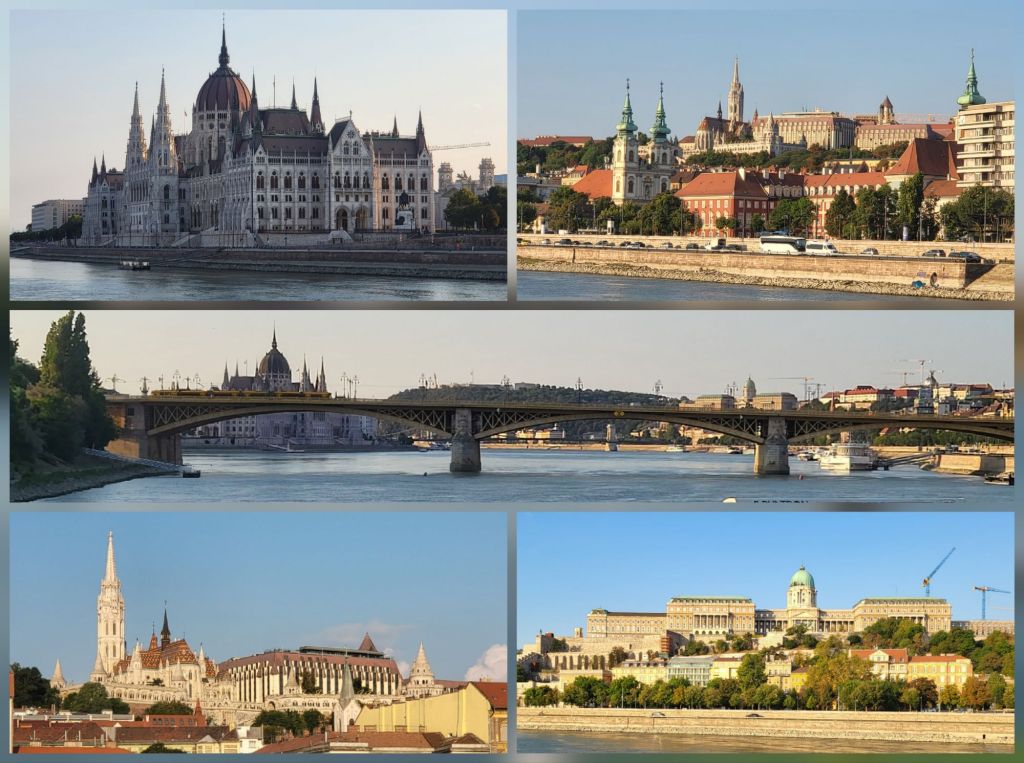
Day 14. The last stop, Budapest. We cruise in from 7am and half the boat is on the sun deck to watch the passage under the bridges. The cruise director provided a commentary on the sights we were passing. We travelled the length of the Danube to dock at the southern end of the city together with Emerald Dawn & Emerald Sun. After breakfast, the tours into Budapest started. First, the bus took us up to the castle area and we had a walking tour finishing at the Fisherman’s Bastion. After some free time, we were on board the bus again for an hour-long tour of Budapest.
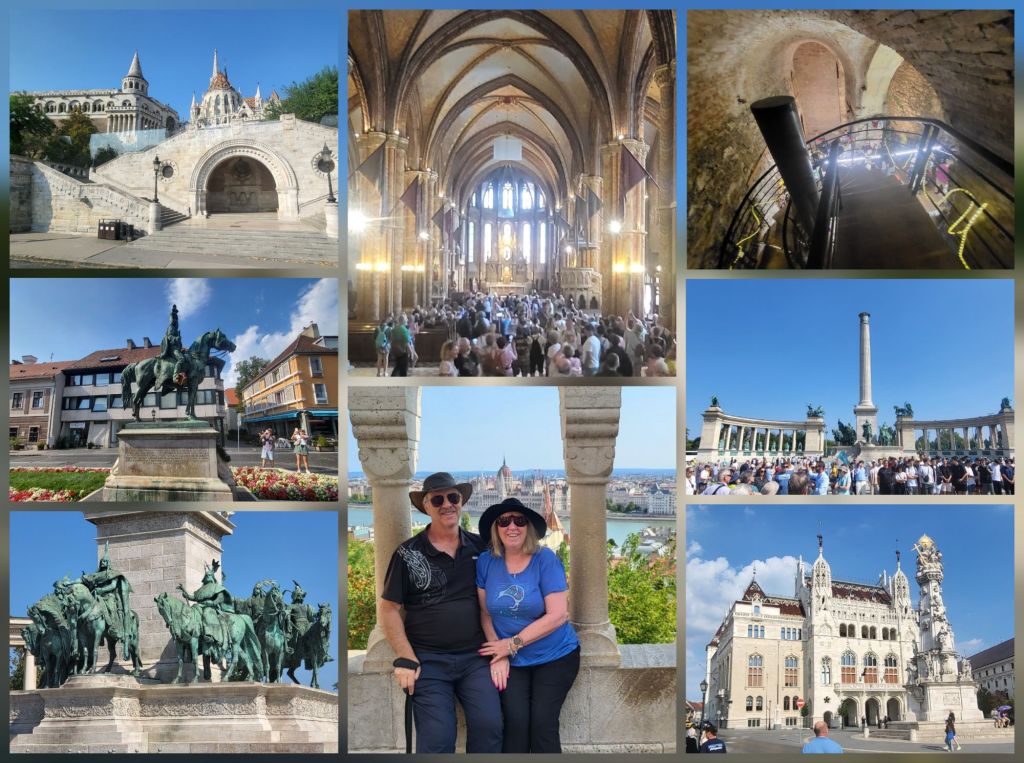
During the afternoon, we had an excursion out to the town of Szentendre, not too far north of Budapest. It’s known for its baroque architecture, churches, colourful houses, art and culture. The main square, Fő Tér, and the alleyways around it are lined with art galleries, museums and shops. It is home to the world’s smallest synagogue (20sqm) and the Micro museum. The museum presents the collection of Mykola Syadristy, a world-renowned master of microminiature art. This can only be visited in 2 other places – Kyiv and Andorra. The smallest chessboard in the world, the smallest book in the world, the smallest art pieces in the world, mainly from gold, visible only under microscopes.

And the last night is upon us. One would think we have a nice easy night, time to pack, and time to have everything ready for checking out and disembarkation tomorrow. But, no, there are more surprises in stall for us. After dinner, we were all upstairs for a raucous Hungarian folklore show. This was a fab show with a 4-piece band and 4 cultural dancers, it also required a lot of audience participation.

As an extra, the ship set sail again sailing to the far end of Budapest and turned around to do a city-lights sightseeing cruise! For this, most all of the passengers were up on the sun deck for the view. We had planned to do an evening dinner cruise whilst we were here in Budapest (at $250 ea), but now we do not need to. Music played, the passengers chatted with excitement, we slowly cruised down the river enjoying the nightlights eventually docking back where we started from. Numerous boats were on the river for the same. Yet another highlight to a fantastic cruise !!

So we finally got down to our cabin and packed ready for the morning. Our cases all had to be outside our rooms at specific times depending on how and when we were departing, it was organised like clockwork. So mid-morning, after a good breakfast, Angie and I disembarked. So many good friends have been made, so many memories, so so many photos!
The next leg of our journey starts today, but that’s for the next issue. Let me know how you’re enjoying the blog and if you have missed any issues, I can forward them on. Past issues are: Getting Ready to Go; Istanbul; Moscow; Saint Petersburg; Berlin; U.K.; Europe 1 – Rhine Gorge; Europe 2 – Mains River/Canal.


Leave a reply to Peter V. Cancel reply